Unknown's avatar

About bobwyss

Bob Wyss is a Journalism Professor Emeritus at the University of Connecticut and a freelance writer. He has written three books and thousands of newspaper and magazine stories during his career..

Engineers Warn: Smoke Goes Or Else

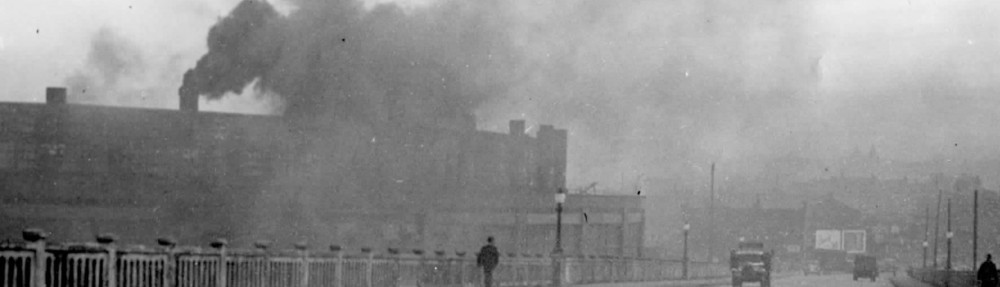
The story so far:  On November 28, 1939, 75 years ago, a thick, black smoke covered St. Louis, turning day into night, snarling traffic and angering and shocking residents.  Coal dealers and producers had fought changes in the past, a December 5 gathering of 52 citizens declared change was necessary and the new Smoke Elimination Committee met for the first time on December 13 and realized that task would be daunting.  

By Bob Wyss

The engineers were blunt – get rid of the smoke or the engineers would flee St. Louis.

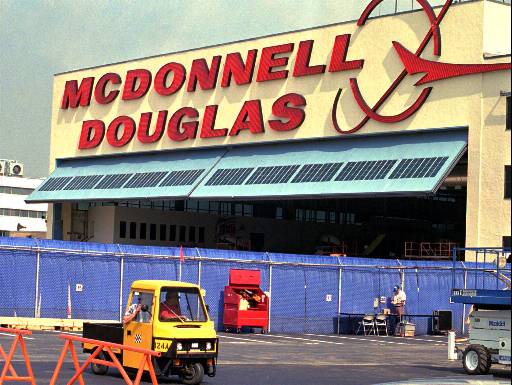
That warning came in a message delivered this week, 75 years ago, by J.S. McDonnell, who was trying to build an aircraft company in St. Louis.  McDonnell was president of the McDonnell Aircraft Corp. based at the local airport, Lambert Field.  In September he had recruited 20 aeronautical engineers and now these men were complaining that they would not subject their wives and families to live with the atrocious air pollution in St. Louis.
MCDONNELL DOUGLAS

The 20 engineers worked for what became a major defense, aircraft and space age firm. AP Photo

The air pollution was the engineer’s only complaint, but it was loud enough to make the front page of the city’s newspapers.  It also earned a ringing editorial from the St. Louis Post-Dispatch warning that the engineer’s complaint needed to be heard.

“It would be no trouble at all for us to transfer operations at the present time to some other place,” said Wade T. Childress, a director of the McDonnell company.  “All the engineers would have to do would be to pick up their blue prints and brief cases.”

The city’s reputation was already notorious.  McDonnell had failed to recruit two other engineers because they said they would not put up with the smoke that fouled the city each winter.  One was from Los Angeles, the other from Buffalo.

The pressure from this announcement was being directed applied at this point to the seven men who comprised the Smoke Elimination Committee.  The members had been meeting two and sometimes three times a week in sessions that could take much of the day.  At this point they were still investigating possibilities.  Or perhaps they were eliminating possibilities.

A week earlier they had met with representatives of the stove and stoker industry.  Installing better equipment to heat individual homes seemed like a good option and stockers seemed especially desirable.

Stokers provided automatic fuel feeds to a coal-fired boiler, which made them far more efficient than a conventional hand-fired boiler, which was usually banked periodically with more coal than it could burn.  For instance the cost with a stoker was about $45 a year, compared to $65 a year for a hand-fired system.

And yet people were not buying stokers in St. Louis, even though they not only were cheaper but created far less pollution.

The reason was that stokers could not burn the cheap, soft coal from nearby Illinois. That savings one got from the stoker only occurred when the more expensive coal was used.

Most people did not want to pay a higher price, no matter how much air pollution was occurring.

In some respects, the discussion was not that different than what has been occurring today.  We know that burning coal to generate electricity is both cheap and environmentally damaging.  And yet for years utilities were allowed to continue to burn coal, despite the costs especially to climate change.

The one difference was that few could see how coal was damaging the environment in the 21st Century.  It was obvious 75 years ago.

But the Smoke Elimination Committee knew it had to heed the warnings of groups like the McDonnell aeronautical engineers.

No one knew at the time, but this minute, fledgling company would eventually grow into a major corporate power.  Especially after its merger in 1967 the new McDonnell Douglas Corporation would become a major producer of jet fighters, commercial aircraft and space vehicles.  It flourished until it was acquired in 1997 by Boeing Corporation in a $13 billion stock swap.

The decision to stay in St. Louis was predicated on what would happen in 1940.
St. Louis Records Blackest Year Ever

The story so far:  On November 28, 1939, 75 years ago, a thick, black smoke covered St. Louis, turning day into night, snarling traffic and angering and shocking residents.  Coal dealers and producers had fought changes in the past, a December 5 gathering of 52 citizens declared change was necessary and the new Smoke Elimination Committee met for the first time on December 13 and realized that task would be daunting.  

By Bob Wyss

Seventy-five years ago the biggest story in the world in 1939 was the outbreak of World War II.  But in St. Louis, as the St Louis Post-Dispatch reported at the close of the year, residents were “more likely to remember it simply as the year of the great smoke.”

Never before had residents been so beset by black clouds of coal smoke.  The U.S. Weather Bureau reported that there were 29 days of thick smoke in 1939 in St. Louis.  Twenty had occurred in November and December.

The highest number in the past, according to records that dated to 1905, had been 18.

The average was nine.

But it was not just the frequency of the black clouds that was remarkable – it was also how thick and dense the smoke could get at times.

On the morning of Dec. 6, 1939 a photographer for the St. Louis Star-Times went to the top of the 21-story Railway Exchange Building in downtown.  It was sunny.  He could see the tops of other tall buildings, jutting out from the clouds below.  As the story reported, it was “a beautiful day, if you didn’t look down.”

The story went on to report:  “Below, the smoke was so thick the building shadows were caught by its upper layer.  Dimly through the muck could be seen lights of street cars, lighted shop signs and automobile headlights.  The entire city seemed to be blanketed in smoke except for the riverfront area which stood out bright in sunlight.  East St. Louis was smoky but not as much so as St Louis.”

Why was St. Louis so prone to such severe attacks by coal smoke?

Henry Gross, a meteorologist at the time, explained that St. Louis was often dead center in a series of slow-moving high-pressure systems.  This caused the wind to diminish, and the clouds of smoke to thicken and not move.

Usually these high-pressure systems moved on within a day, which allowed the wind to pick up and whisk the clouds away.  One of the chief features of these smoke attacks was that they usually only lasted a day or so.

But Gross said what made it particularly challenging for St. Louis was that often in the winter these high-pressure centers came down from the north, bringing especially frigid temperatures.

The result was that most citizens fired up their coal-fired boilers and heaters more often, which only produced even more smoke.

November and December were often worst than January or February, added Gross, because the high-pressure centers did not linger as long in the latter months as they did in the late fall and early winter.

Gross told the Post-Dispatch that he had one solution for the problem – “install batteries of herculean blowers around the city.”  There would have to be enough to produce winds of at least six miles per hour velocity.  Less would not clear the smoke.

But as Gross thought about his idea he had misgivings.  It had nothing to do with the cost or the practicality.  Even if the blowers succeeded, he realized, “the smoke would simply be blown into somebody else’s back yard.”

Coal Price Highest for the Poor

The story so far:  On November 28, 1939, 75 years ago, a thick, black smoke covered St. Louis, turning day into night, snarling traffic and angering and shocking residents.  Coal dealers and producers had fought changes in the past, a December 5 gathering of 52 citizens declared change was necessary and the new Smoke Elimination Committee met for the first time on December 13 and realized that task would be daunting.  

By Bob Wyss

In the winter of 1939-40 a day in St. Louis often meant a day of darkness.  Smoke blotted out the sun one out of every three days.  Each became just “another daytime night,” Virginia Irwin wrote in the St. Louis Post-Dispatch.

On one of these dark winter day Irwin ventured into several of the city’s poorest and smoke-blackened neighborhoods.  “Overhead the smoke sewer hung ugly and black,” she reported.  “Hungry children with dirty gray underwear showing where tattered stockings and too-short coats failed to meet were hurrying home from school through the rutted, sooty snow.  Fuel vendors with their wares in bushel baskets chanted mournfully, ‘Co-ul, co-ul, co-ul’.”

Smoke, she found here, was just another burden for those without, a “friend of futility” which battered morale.  Many, when asked how they felt about this smoke-darkened winter, would reply “bread and milk come first.”

Irwin found a junk vendor at Fifteenth and O’Fallen streets.  She said that his hand cart was an ancient vehicle, piled with old cartons, wooden paving blocks, and barrel staves.  The junk dealer invited her to warm her hands over a small tin can hanging from the back with a fire burning in it.  As she did, she asked if the smoke was always this bad in the neighborhood.

“Long’s I can remember has been,” he replied. “They say the city’s going to do something about it, though what it is to be to help folks who hain’t got no money to buy coal, I can’t rightly say.”

A moment later he moved on, putting all of his weight into the cart to get it going.  Irwin noticed that the burlap that was wrapped around his feet flopped in the snow.

A few doors down, between two abandoned tenements, she found a one-room shack where a feathery smoke plume spiraled out of the chimney.  There was what Irwin called “a spry old lady of 80” living there with a cat and a dog.  It was hard for Irwin to get the woman to talk about the smoke, but the woman did offer that “they ought to work some way to get shut of it.  But what can folks like me do?”

On this, the blackest year St. Louis had ever experienced, the smoke blanketed the poor neighborhoods of the Irish, German, Czechs, Slavs, Poles, Bohemians, Italians, Jewish and African Americans. Many of the immigrants were first generation, the blacks from the South, and most had few possessions or money.  The coal smoke did not discriminate by income, it did not favor one class, it did not shun any particular community.  It filtered into the rows of red brick houses, the modest middle class white neighborhoods of the merchants, the office worker, the junior administrators.  And it trickled down the grand boulevards leading west to Forest Park that featured sprawling brick and stone mansions.

Yet the poor still paid the most, not only in pollution, but even in the price of the coal. In much of the city coal was delivered by the ton.  In the poor neighborhoods it was sold by the basket.

Coal dealers would sell from trucks, wagons or even push carts, setting up in strategic locations and advertising their wares by yelling “coal, coal.”  The coal baskets cost from 10 cents to 25 cents, and would usually provide enough fuel for two to three days.  On any one day these customers rarely had more than a quarter to their name for coal.  The mark-up on price was so great that the accumulated price for all of these baskets over course of a winter amount to a price of $5 a ton to $7 a ton.  That was more than double what was paid by those who bought by the ton.

Raymond Tucker, the city’s smoke commissioner, told the Smoke Elimination Committee investigating the pollution that there was another problem with these dealers.  He said many were purposely cheating their customers, purposely adding slate and other innate rock into the coal.  While the city regulated the trade by licensing dealers and inspecting their loads there were always some that seemed to slip by.  “We have men on the street at ten and eleven o’clock at night, at three or four in the morning, but unless you have 24-hour shifts you cannot stop these fly-by-night truckers,” said Tucker.

Virginia Irwin of the Post-Dispatch spent the day roaming these neighborhoods, hearing the same stories.  As dusk arrived the smoke thickened as chimneys warmed with supper fires.  A woman walked out of a doorway and dumped ashes in the gutter.  A bum spat on the sidewalk.   “Another St. Louis sunless day,” reported Irwin, “was done.”

Black Christmas for St. Louis

The story so far:  On November 28, 1939, 75 years ago, a thick, black smoke covered St. Louis, turning day into night, snarling traffic and angering and shocking residents.  Coal dealers and producers had fought changes in the past, a December 5 gathering of 52 citizens declared change was necessary and the new Smoke Elimination Committee met for the first time on December 13 and realized that task would be daunting.   

By Bob Wyss

The St. Louis winter of 75 years ago brought a black Christmas.

Smoke began to thicken on Christmas Eve and it would remain dense through Christmas day.  The only exception was around noon, when a pale yellow sun struggled to shine through the thick sky.

One bonus was that the city was 15 degrees warmer than the less populated, less polluted outskirts of the city.  Meteorologists attributed the warmth directly to the clouds produced by the burning coal.

While plants withered and humans coughed, animals did not know quite what to make of the winter.  Roosters in particular were confused, crowing whenever they believed that dawn was breaking, which meant anytime of the day.

For one new arrival in St. Louis the winter was even blacker.

Pae Pei had arrived three months earlier.  His once vibrant white coat was turning black.  Some believed that he was now wearing at least a half a pound of soot and dirt.

Pae Pei was a young panda at the city zoo.  His handlers decided, reluctantly, that there was only one solution – Pae Pei would have to have a bath.

The reluctance was understandable.   Bathing panda was like trying to hold a snake still.  It took two strong men, a tub of soapy water and a large pan of honey to calm and distract the panda.

Even then it was a struggle.  He refused to get in on his own.  When he was finally carried in, he whimpered like a baby.  He also tried to bolt.  The two men struggled to contain him.  Water splashed.  Grown men hollered.  Soap flew.

When it was over, Pae Pei was once again suddenly white.

A zookeeper placed some more honey on Pae Pei’s paws.  The panda whimpered contentedly.  His clean new coat gleamed.  It would stay that way until the clouds of smoke rolled in, again, and again this winter.  And then Pae Pei would have to face another bath.

If only it was that easy for the rest of St. Louis.

Government Ponders Coal Takeover

The story so far:  On November 28, 1939, 75 years ago, a thick, black smoke covered St. Louis, turning day into night, snarling traffic and angering and shocking residents.  Coal dealers and producers had fought changes in the past, a December 5 gathering of 52 citizens declared change was necessary and the new Smoke Elimination Committee met for the first time on December 13 and realized that task would be daunting.   

By Bob Wyss

For decades St. Louis had been waiting for someone to come up with a solution to its winters befouled by coal black smoke.

The result, 75 years ago in the winter of 1939-40, was the blackest, foulest, most smoke-infested winter in memory.

As the Smoke Elimination Committee met on Dec. 22, 1939 members began to question whether private industry was up to the task.  Perhaps it was time for the city to take over the role of acquiring and selling all fuel supplies in St. Louis.

It was a radical idea that increasingly was being embraced by more and more people this winter in St. Louis.

Ralph Coghlan, the editorial page editor at the St. Louis Post-Dispatch, told Publisher Joseph Pulitzer II of an encountered he had had with a prominent businessman.  The man was “an unreconstructed Tory,” who was bitter opposed on principle to public ownership of any utility.  Yet that individual had told Coghlan that the only solution was a municipally-owned plant to produce cleaner fuel.  Plus, added Coghlan, Erastus Wells, vice president of the St. Louis Union Trust Co., was urging the Post-Dispatch to run a campaign to accomplish this.

All three of the city’s newspapers had issued editorials supporting the idea of a municipal plant that would produce a more cleaner-burning coal.

The St. Louis Star-Times’ November 14 editorial was as pointed and direct as anything that would be written across town by Coghlan.  It said that it had had heard enough excuses about the city’s smoke problem.  “This is absurd,” the editorial stated. “It is ridiculous to suppose that a modern American city, simply because it is located close to Illinois soft coal fields, must submit indefinitely to smoke blankets.”  The editorial suggested that the city build a municipal coal plant and if the fuel was expensive then the city should consider subsidizing the price.

The St. Louis Globe-Democrat agreed and called for a city-owned plant that would produce a smokeless fuel.  The editorial said it was confident that a new product could be produced in the plant for about $5 a ton, which was still considerably above what many people were now paying for the soft coal that was causing the problem.

Sam Shelton, who was reporting the story for the Post-Dispatch, wrote a long memo to his editors indicating that the city’s best option would be to establish a municipal yard to buy cleaner fuels and to sell them to local dealers.  That way the city could control the final price to consumers through regulation.

But at the meeting on Dec. 22 the committee began to meet some resistance to government control.  Alexander Langsdorf of the Washington University School of Engineering told the committee that municipal control was not the answer.  Private enterprise could still solve the problem, he assured committee members.

But how?

They discussed the options, which ranged from cleaner coal products to natural gas.  They had already begun to explore each of them in meetings, and would continue for the next month.  But none looked promising.  The harder coal products were far more expensive.  Natural gas seemed a better solution, but the local utility company seemed reluctant to expand and supply enough fuel in a timely manner.

Langsdorf suggested that perhaps the burden to buying a cleaner, more expensive fuel should be placed on the landlord rather than the tenant.

Wasn’t that a form of confiscation, asked one committee member.

No, Langsdorf replied, it was an issue of civic responsibility.

When committee members left City Hall late that day they noticed that the smoke was not as thick this evening as it had been.  The day before the smoke had been nearly as bad as the first major attack Nov. 28.  It was the seventh severe attack of the month and the 19th since Oct. 31.

The smoke was not lifting and so far the committee had no answers, no solution.

Plants Forsake St. Louis and People

The story so far:  On November 28, 1939, 75 years ago, a thick, black smoke covered St. Louis, turning day into night, snarling traffic and angering and shocking residents.  Coal dealers and producers had fought changes in the past, a December 5 gathering of 52 citizens declared change was necessary and the new Smoke Elimination Committee met for the first time on December 13 and realized that task would be daunting.   

By Bob Wyss

In February, 1923 the impossible became reality.  The board of directors agreed to begin moving portions of the Missouri Botanical Garden out of the city of St. Louis. Newspaper headlines at time were not upbeat:  “Smoke To Cost City At Least Part of Shaw’s Garden,” and “New Site Bought By Shaw’s Garden to Escape Smoke.”

George_Thomas_Moore_001

George Moore, Garden Director

George T. Moore, the garden’s director, said that many of the garden’s resources, including its library, research facilities, and its public gardens and display areas would remain in St. Louis but that safer grounds for other species needed to be found outside of the city.

It took two years to find a suitable site for the new garden.  A headline in the Globe-Democrat Magazine called it “A Botanical Paradise on the Meramec.”  The 1,300 acres were 38 miles outside of St. Louis near Gray Summit.  The land had been comprised of five separate farms and it featured rich clay and sandy loam, black bottom land, and limestone bluffs along the Meramec River that bordered one side of the property.  There were also good roads back to St. Louis, a critical factor if plants and collections were now going to be transferred out of the city.

Work began almost immediately on the construction of eight greenhouses, each 100 feet long and 27 feet wide.  They featured special shading to help the orchids get through the hot Missouri summers and a water evaporation system to keep them moist year-round. When the greenhouses were completed, virtually the entire orchid collection, along with some of the tropicals, were transferred there.

SHAW

Shaw Mansion at Garden – AP Photo

To make up for the loss of evergreens at the St. Louis grounds 60 acres at Gray Summit were set aside for what was soon being called the Pinetum.  Pine, spruce, cypress and juniper from North America, Europe and Asia – 450 species in all – were planted around a three-acre lake that was carved out of a ditch using mule-drawn equipment.  Crabapple, cherry, apple, dogwood, redbud were planted along with 15,000 dafodils that would bloom each spring and produce another great show for visitors.

Moore’s decision to move the more delicate plants was vindicated in December, 1927 when a particularly foul attack of smoke settled over St. Louis for several days during the Christmas holiday. Moore announced that his air monitoring equipment showed that each person had inhaled 1.25 ounces of soot.   To pound his message home that smoke was dangerous, in the days after the so-called Black Christmas attack he staged a special display of plants that had been severely affected by the smoke.  Poinsettias before Christmas had been particularly lush.  Now, as the St. Louis Post-Dispatch reported, “Not a plant is left with more than three or four leaves.  The bracts that flaunted their crimson so magnificently are drooping.  The hundreds of tiny flowers that bordered the poinsettia exhibit dropped their blossoms last Sunday, when the smoke closed down, and the entire plants in many cases are beginning to wither.”  Plants and trees normally in the nearby Flower House were also included, and most had lost at least a quarter of their leaves.  The reporter went on to report: “The strychnine plant in a flower house special exhibit lost every leaf.  Three great flame trees in the south end of the flower house are turning like maples in autumn and even thick, hard leaves of the rubber trees along the side are beginning to turn.”

Moore repeatedly stated that some aspects of the botanical garden would remain in St. Louis but by 1930 he was changing his mind.  The contrast between the city garden and the country grounds was startling. The improvements in the orchids at Gray Summit were a “little short of phenomenal,” according to a 1928 report.  By 1930 virtually all of the evergreens that in St. Louis had died except for one hemlock and a few Austrian pines whose stems and branches were twisted and distorted.  The dogwoods in St. Louis never bloomed while in Gray Summit their blossoms were startlingly beautiful.

By 1933 Moore was openly talking about closing the St. Louis facility but over the years he could not make it happen.  The Depression was underway and what little money that could be raised had to go to maintaining the current grounds.  Plus, the board was divided on the issue.  By December, 1939 he had made very little headway in moving all of the gardens to the country.

In a radio address in 1930 Moore summed up his worries about these continuing smoke attacks in St. Louis. “It is only after witnessing a spectacle of this kind that one can begin to comprehend how poisonous smoke can be to plants,” he said.  “The question arises, if all vegetation suffers as it obvious does from smoke, what is happening to human beings?”

What indeed?  Moore and the Missouri Botanical Garden had clearly saved a few thousand beautiful orchids and they were bringing back life in the country. But what about what had been left behind in the city?  What was going to happen to the people of St. Louis?  Would anyone come to save them?

Saving Life By Doing the Unthinkable

The story so far:  On November 28, 1939, 75 years ago, a thick, black smoke covered St. Louis, turning day into night, snarling traffic and angering and shocking residents.  Coal dealers and producers had fought changes in the past, a December 5 gathering of 52 citizens declared change was necessary and the new Smoke Elimination Committee met for the first time on December 13 and realized that task would be daunting.

By Bob Wyss

The damage was extensive.  While there were few deaths, there were thousands, perhaps tens of thousands, of casualties.  Days afterwards many of the survivors were still struggling to take in air. Limbs were limp or bent, and many survivors bore odd coloring, displaying hues of yellow, brown or even black. Their flowers and leaves were dropping to the ground.

George_Thomas_Moore_001

George Moore, Garden Director

They were all plants or trees and they were fighting to survive at the renowned Missouri Botanical Garden in St. Louis, The tropical’s, especially the orchids, seemed most affected, but even the evergreens were suffering.

It was late fall in 1917 and black smoke had descended on the city once again.

The Missouri Botanical Garden was a great treasure at the corner of Shaw Boulevard and Tower Grove Avenue in central St. Louis. Henry Shaw had built a fortune in St. Louis in the hardware business, retired at age 40, and built his garden.  The garden had a close relationship with Washington University’s Botany School – also founded by Shaw – and by the early decades of the Twentieth Century its botanical resources were among the greatest in the world.

The garden’s staff was voracious in buying what they could not gather on their own, and that’s why its Herbarium for instance was one of the best in the world, with prized specimens collected by Charles Darwin on his voyage with the HMS Beagle and others found on the 1768 voyage of Captain James Cook.     The orchids, which were especially threatened by the St. Louis coal smoke, also carried an international reputation

Paul Allen, who managed the garden’s Panama substation would go out on weekends and gather literally truckloads of orchids. During one trip back to St. Louis he described how he had brought 500 species back with him and he was hoping that the staff would be able to identify how many were new discoveries.

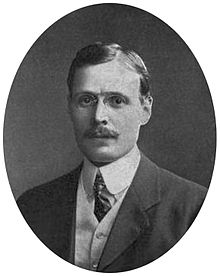
There was much to lose and no one understood the dangers of coal smoke more than George T. Moore, who took over as the garden’s director in 1912.  He quickly became involved in a whirlwind of activity both at the garden and beyond in both civic and municipal volunteer roles.   And many of those roles focused on the problem of the coal smoke. Moore also served as voluntary president of the Citizens Smoke Abatement League in 1926, a community effort which quickly raised $192,000.

Over the next years the league carried out a campaign that included public meetings, radio addresses, reports and advertisements on the ills of smoke pollution.  The most successful aspect of the campaign was the hiring of 36 employees, described as inspectors, who visited factories, offices, hotels, apartments and even duplexes and homes, providing lessons on how to fire boilers and produce less smoke.  The inspectors were spectacularly successful, and for several winters the amount of smoke in the city was cut by more than 50 percent.

Moore also imported from England an air filtering mechanism that measured the amount of smoke in the air.  It showed that St. Louis residents were each inhaling an average of 28 pounds of soot each year.  Moore refrained from saying how this affected the health of those living in St. Louis, but in interviews and talks about the issue he would cite studies in England that linked air pollution to increased respiratory problems.  And, ever the botanist, he was more direct in talking about their effect on plants, saying that it would be fatal to all but the most resistant plants.

Then Moore began talking about the unthinkable. Beginning in the early 1920s Moore and his staff could look at early photographs of the garden and compare them with what remained, and the discovered that the picture was not pretty.  Many of the evergreens in particular were gone, casualties of the smoke pollution, according to Moore.  He told the board of trustees in late 1922 that they had no alternative – the great botanical garden should move out of St. Louis.

The city was no longer safe.

It was a shocking idea.  Would the Botanical Garden truly abandon St. Louis?  Would it move its plants and leave the people of St. Louis behind?

Panel Told Task Great, Need Greater

The story so far:  On November 28, 1939, 75 years ago, a thick, black smoke covered St. Louis, turning day into night, snarling traffic and angering and shocking residents.  Coal dealers and producers had fought changes in the past but on December 5 a gathering of 52 citizens declared that change was coming.

By Bob Wyss

The new Smoke Elimination Committee met for the first time today, December 13, 1939.  Of the seven members (all males) only one – Smoke Commissioner Raymond Tucker –  had any knowledge about the city’s air pollution problems.

James L. Ford, a banker was chosen as chairman and as the committee began to discuss what was ahead he posed a challenging question to Tucker.

“Is there any community that has solved this problem?” he asked.

“None, as far as I know,” replied Tucker.

Yet the committee knew that they would have to find a solution. Mayor Bernard Dickmann had made that clear in announcing their appointment.

“This is to be called the Smoke Elimination Committee,” Dickmann told reporters during a press conference.  “I am tired of the word abatement applied to such a group.  From this committee I want action, not just a report. This committee is not going to be dormant – it is going to act.”

The mayor had also spoken on two radio stations KSD and KMOX to promote his selections.  By this point KSD had reserved 15 minutes every Sunday afternoon to bring listeners up to date on the city’s smoke problems, a sign as Dickmann said that there was a new attitude in the city, primarily because of the press.

He said the city’s newspapers had thrown “themselves into the fight with a renewed vigor that has never lagged.  The result has been that within two short weeks St. Louis has organized itself into the greatest united front for a common cause ever existent in our city.  I thank the press, the radio stations, public and private organizations and all individual organizations, and individuals for this new spirit of a new St. Louis.”

The committee convened at 11 a.m. in the mayor’s office of City Hall.  Besides Tucker,  Dickmann had insured loyalty by appointing his secretary, John B. Sullivan.  A physician, Dr. Alphonse McMahon, was there as a public health expert.  Kelton White, a retired broker, and Ford, vice president of the First National Bank, had financial expertise and could build support from the business community. Real estate might also be involved in such a venture, and that was why Chase Ulman, one of the city’s major developers, was on the committee.  Gaston DuBois, as a chemist for Monsanto Chemical Co. could provide technical expertise.

Ford, the banker, was chosen as chairman because he had played a leading role in a recent major charity campaign.  At first he argued he was not qualified.  “I know absolutely nothing about the problem,” he said. Dickmann who was attending responded that the committee needed someone practical and not a technical expert.

It would turn out to be a wise decision.  Not only would Ford work with Tucker and Dickmann in leading the campaign for the next year but his business and political connections would come in handy at key points.

Tucker told the committee that the air pollution was coming from three sources and he felt he could easily control two of them, the business community including both commercial and industrial sectors, and secondly the railroads.  Many firms were already using cleaner fuels, including fuel oil, natural gas, diesel or coal byproducts that were smokeless.  The railroads were still a problem, but Tucker felt he could control their emissions.

The third sector was the residential market, and that was where the problem was the greatest.  Only a small number of dwellings burned smokeless fuels.  Tucker estimated that 2.5 million of the 4 million tons of soft coal burned in the city each year came from single family homes and apartment buildings. To truly reduce the pollution, the city would have to find another source for at least 2 million tons a year that residents burned.  That would not be easy, Tucker told them, because the Illinois soft coal could be bought for about $2.75 a ton.  Other fuels cost more than double that.

St. Louis had become addicted to this cheap, soft coal. Later, Tucker would report:  “I have consulted other towns of 500,000 or over, and I don’t believe there is any place where fuel is sold as cheaply as here.”

Meanwhile outside, in the middle of the day, patches of black smoke lingered yet another day.

Women Lead and Men Follow

The story so far:  On November 28, 1939, 75 years ago, a thick, black smoke covered St. Louis, turning day into night, snarling traffic and angering and shocking residents.  Coal dealers and producers had fought changes in the past but on December 5 a gathering of 52 citizens declared that change was coming.

By Bob Wyss

In the late 19th Century and into the early 20th Century women were the leaders in fighting air pollution and men were the laggards.

Civic organizations, such as the Ladies Health Protective Association of Pittsburgh and the Wednesday Club of St. Louis, arose to fight the air pollution in their cities in the late 1800s. The smoke was branded as “evil’ and a threat to the city’s moral and physical well being.  One social reformer of the time said that a “spotless town is a more moral town than an air-polluted town.”

Daisy

Frances Grenville, a smoke foe

Because women were so powerless at this time (they did not even have the right to vote), they often were not taken seriously.  Women in a campaign in Pittsburgh were accused of fighting the smoke because they were worried about their complexion.  When women in Chicago offered to help the city identify smokestacks emitting the worst pollution, a cartoon in a newspaper depicted women in elaborate hats, perched on rooftops, working on their needlepoint as smoke spewed from chimneys.

As Henry Obermeyer, the author of Stop That Smoke explained, in any city the public leaders preferred not to see the smoke, or if they did, to only view it in a positive light.  Obermeyer would quote them somewhat facetiously as saying “Our smoke is the symbol of our prosperity.  Whatever we think among ourselves, for Heaven’s sake don’t talk about it or you’ll scare everybody away.”

There were a few powerful women who lent their support to the cause of fighting air pollution.  Frances “Daisy” Grenville, the countess of Warwick and one time lover of Queen Victoria’s son and crown prince, supported one such campaign in England.  She was quoted at the time as declaring “It is really as great a crime to pour poison into one’s neighbor’s lungs as it is to put poison in his coffee.”

In St. Louis the Wednesday Club, an elite women’s group, created the city’s first smoke control ordinance in 1893. Women’s organizations in the 1920s created the Citizens’ Smoke Abatement League that raised $200,000 (the equivalent of $2.5 million in today’s economy) to launch an educational program aimed at convincing both industry and consumers to try cleaner-burning fuels.

The smoke was everywhere.  It affected the skin, a person’s clothes and even their hair. S.A. Sperber, past president of the National Hairdressers and Cosmetologists’ Association, said the increased sulfur in the air caused dry and brittle hair.  Beauty parlors used extra oils in shampoos but women with blonde or light-colored hair still had to visit far more often that dark-haired women.  “Sulfur in the smoke turns white hair yellow,” said Sperber.  “And as for the blondes – how many lovely blondes have we turned out bright and shining who come back after a few days and complain that we couldn’t have done our job well.”  Men were more stoic, but Sperber said that anyone who put up with smoke-infested brittle hair all winter paid a price, increasing the likelihood of hair follicles falling out and baldness.

But women did not just fret about their skin or their hair.  Many worried about their children.

Health records showed that infant mortality rates were far higher in urban than rural areas.  Dr. W.A. Brend, who had studied those figures in England, said that “a smoky and dusty atmosphere” transcended all other influences related to the discrepancy in infant deaths.

New York City Health Commissioner Shirley Wynne – one of the few women in an authority position at the time, was very worried about the decades of delay in clamping down on air pollution in New York and elsewhere.  “Unless we stop air pollution, we may look forward to a sickly, deformed generation which industry itself has cheated out of the right to healthful development,” she said.

Finally now in St. Louis the smoke and air pollution had been so great that virtually everyone was talking about it. And the women kept applying the pressure when they could. Later that year an exclusive St. Louis women’s organization broke one of its rules that prohibited any men from attending its gatherings. It invited Mayor Bernie Dickmann to its annual fundraising performance.  The hit of the show was a woman who periodically wandered into the other skits, seemingly lost.  At first she was wearing a white dress but as the performance continued her apparel and skin took on darker and darker tones, until she arrived in her final appearance quite blackened from the coal smoke that everyone feared.

The first meeting of Dickmann’s new Smoke Elimination Committee was scheduled to convene in two days – on December 13.  Would Dickmann finally break down and invite a woman to participate in the deliberations?

Coal’s Footprint Stains Daily Life

The story so far:  On November 28, 1939, 75 years ago, a thick, black smoke covered St. Louis, turning day into night, snarling traffic and angering and shocking residents.  Coal dealers and producers had fought changes in the past but on December 5 a gathering of 52 citizens declared that change was coming..

By Bob Wyss

It is difficult to imagine in the 21st Century what it was like for residents of the first half of the 20th Century to live with coal.  The pollution was bad and the soot and dust were terrible.  It stained women’s gloves, soaked into their hair, and discolored the curtains and wallpaper in their homes.

Louis G. Brenner grew up next to Tower Hill Park in south central St. Louis and he used to cut through the Botanical Garden on this way to school.  “I can remember walking to school and being able to stamp your foot on the sidewalk and leave a footprint where the impact of your foot blew the soot aside,” he said.  “I can remember the days when it should have been bright, sunny and the air was just horribly hazy with just smoke.  Aw, it was bad.”

Living with coal meant more than the smoke and dust. It was the awful clatter of the coal being dumped in the alley outside the house, the scramble to get it down the coal chute into the cellar before it got dark, the chore of banking the coal downstairs every night before the family went to bed and then the task of removing the clinkers from the ash.  “It was just always a dirty, dirty mess,” said Mildred Niermann.

Women, even those wealthy enough to employ cleaning help, reported that they or their staff spent much of their time cleaning. Soot had a way of getting into every home, even if they did not burn soft coal, and even if their windows were all shut and newspaper was wedged into the cracks and seams.   One woman said that she was “eternally cleaning.  We clean out own wall paper and wash and paint our own woodwork and hardly get one room done than we begin another.”  She lived in a huge house in what was traditionally one of the smokiest neighborhoods in the city. Another said that every Monday was “Black Monday. Cook, housemaid and outside help turn out.  I drive my own car while the chauffeur turns houseman.  They scrub, polish, vacuum clean.” She added, “Of course, when one buys house furnishings in St. Louis, one cannot buy for beauty.  First one must ask, will it wash, will it clean, is it a color that won’t show the dirt?”

There was also the task of dealing with the coal itself.  Most homes and apartments bought coal by the ton and had it delivered by truck.  Usually it was dumped in the back alleys that were common in St. Louis, and the coal would make a loud, clattering racket.  One could pay the coal men to transfer it to the chute leading into the basement, or one could save some money and shovel it oneself.

Alice Rapp Bennett was only about seven years old when her family asked her to start helping when she would get home from school.  She remembers it was an awful, messy task.  The coal shovels would take forever to transfer the fuel from the alley to the coal chute, where it would make a thunderous racket when it toppled into the bin.  Coal dust would rise from the pen and even up the chute.  It would take hours to settle and unless the bin was fully enclosed the dust would settle throughout the cellar and sometimes seep into the house.   When Alice’s father got home he would help, but the family often had to race against the darkness to get it cleared out of the alley. If darkness came first, a lantern had to be placed by the pile to warn motorists.

The coal furnaces also were very demanding.   Until mechanical stokers were added, which allowed the coal to be fed automatically into the furnace, someone would have to go down every few hours and shovel the coal in manually.  Mechanical stokers were around in 1939, but not very many people had them. The task of shoveling was especially onerous at night. Every evening before the family would retire someone would have to go downstairs and bank the furnace for the night.  That supply usually lasted until around four in the morning, when someone would have to return again.  Sometimes the task was left to an adult but in larger families the children quickly learned the responsibility of the early morning coal duty.  Children also learned rapidly that letting the fire die would not be tolerated in a house that could quickly turn stone cold.  Sometimes it took hours to get the heat back.

Finally, there was the task of removing the ashes and clinkers, the black metallic residue that had not burned.  Again, as the shovel dug into the dry ash and metal the dust would rise from the furnace.  When it was dumped into a metal wash pan it clattered and the dust rose a second time.

No one liked coal. Kids might complain, parents were more tolerant, but no one yet had come up with a cheaper, better alternative for staying warm in the winter.